Not everyone has the time to head to the court every day, and honestly, that’s where many players start to fall behind. The good news is, you don’t actually need a full court to improve your game. You can practice pickleball at home and still build strong skills if you know what to focus on.
A lot of beginners wonder, can you really get better without playing full matches? The answer is yes. With the right approach, even a small space can help you work on control, timing, and consistency. In this guide, we’ll break things down in a simple way so you can pick things up step by step and feel more confident in your game.
Why Practice Pickleball at Home
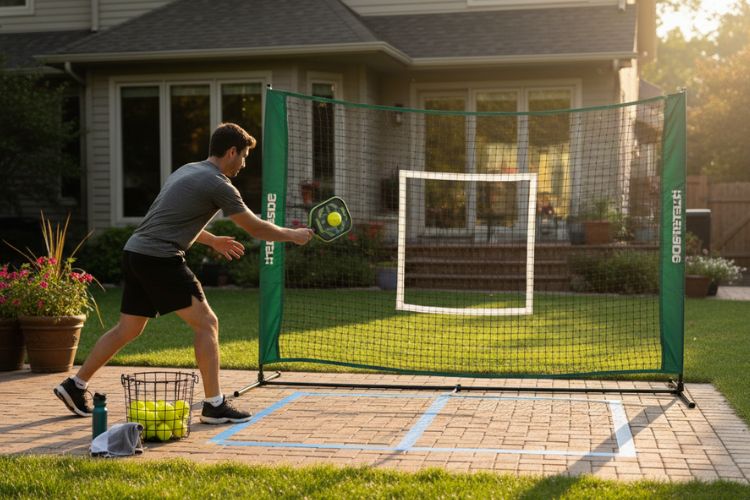
One of the biggest advantages of choosing to practice pickleball at home is convenience. You don’t have to plan your day around court time or wait for a partner to show up. You can just grab your paddle, get started, and fit in a quick session whenever you have a few minutes.
It also helps you stay consistent, which is something many players struggle with. When you show up regularly, even for short sessions, your muscle memory starts to build naturally. Over time, you’ll notice your shots becoming more controlled and your reactions quicker. Adding a simple pickleball workout into your routine can also help you stay active and improve your overall performance without even stepping onto a court.
What You Need to Get Started
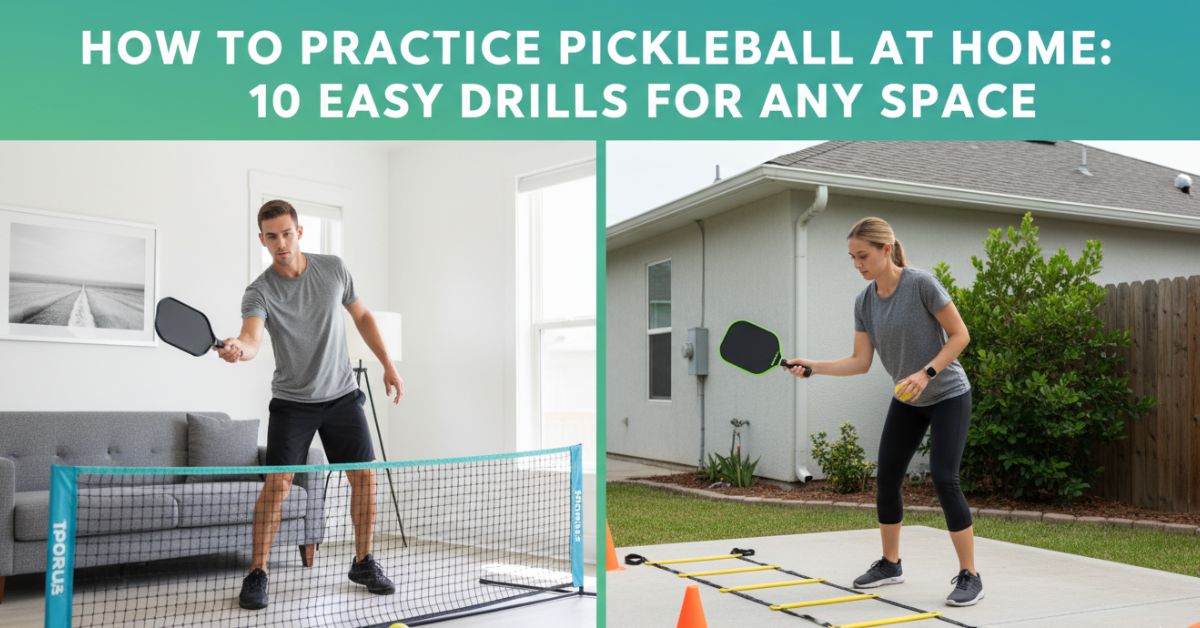
Getting started at home is much easier than most people think. You don’t need fancy equipment or a large space. A paddle, a few balls, and a wall are usually enough to begin your pickleball practice.
If you have a small open area, you can set up simple targets using tape or even household items. This helps you stay focused and gives your practice more purpose. The goal is not to create a perfect setup but to make the most of what you have. Once you figure out how to use your space, you’ll find it easier to stick to your routine and not put things off.
10 Easy Pickleball Drills at Home
If you’re trying to practice pickleball at home, the best way to improve is by using simple drills that focus on control, consistency, and movement. You don’t need a partner or a big space to get started. In fact, many of these are perfect pickleball drills for one, which makes them ideal for solo sessions when you just want to pick up your paddle and get going. The key is to stay consistent with your pickleball practice and focus on doing each drill with purpose rather than rushing through them.
Wall Rally Drill
This is one of the easiest ways to build consistency when you’re practicing at home. Stand a few feet away from a wall and hit the ball back and forth, trying to keep the rally going as long as possible. It may feel simple at first, but the longer you keep it going, the more control you develop.
Over time, you’ll notice your timing improving and your shots becoming more stable. This drill is a great starting point when working on pickleball drills at home because it helps you settle into a rhythm without overthinking.
Dinking Practice
Dinking is all about soft control, and practicing it against a wall can really help you fine-tune your touch. Try to hit gentle shots that stay low and controlled rather than hitting the ball hard. This helps you slow things down and focus on precision.
At first, it might take a little time to get used to the softer feel, but once you do, it becomes much easier to manage your shots during a real game. This is one of those drills that really pays off when you stick with it.
Shadow Swings
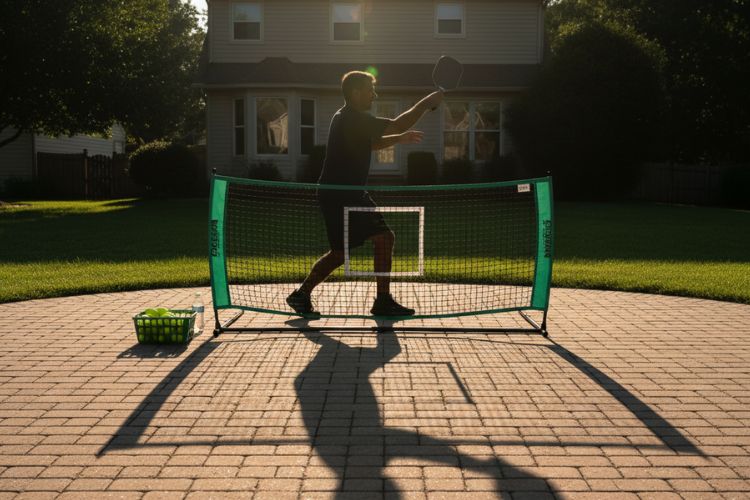
Sometimes, the best way to improve is to step back and work on your form. Shadow swings allow you to practice your movement without worrying about the ball. Focus on your grip, your swing path, and your follow-through.
This might seem basic, but it helps you clean up your technique and build muscle memory. When you go back to hitting the ball, everything feels more controlled and natural.
Target Practice
If you want to improve accuracy, this drill is a must. Set up a small target using tape or any object you have at home, and aim your shots at it. This gives your practice a clear goal and keeps you focused.
Instead of just hitting randomly, you start to think about where you want the ball to go. Over time, this improves your precision and helps you stay more consistent during games.
Footwork Drill
Even in a small space, you can work on your movement. Practice stepping side to side, forward and back, while staying balanced. Good footwork helps you get into position quickly and stay ready for the next shot.
Many players overlook this, but it makes a big difference in how you perform. The more you work on your movement, the easier it becomes to handle different situations during a match.
Serve Practice
Serving is one of the most important parts of the game, and practicing it at home can really help you improve. Focus on your motion, your balance, and where the ball lands. You can also work on small adjustments by following basic pickleball serving tips to make your technique more consistent.
Take your time with each serve instead of rushing through them. The goal is to build consistency so that your serves feel reliable when you’re playing on the court.
Reaction Drill
This drill is great for improving your reflexes. Drop the ball and react quickly to hit it before it bounces too much. It helps you stay alert and improves your response time.
At first, it may feel a bit challenging, but once you get into it, you’ll start to react faster without thinking too much.
Kitchen Control Drill
Control near the kitchen line is a big part of pickleball, and this drill helps you get comfortable with soft, controlled shots. Try to keep your shots low and steady while focusing on placement.
This helps you develop better touch and control, which is essential when playing against more experienced players.
One-Hand Control Drill
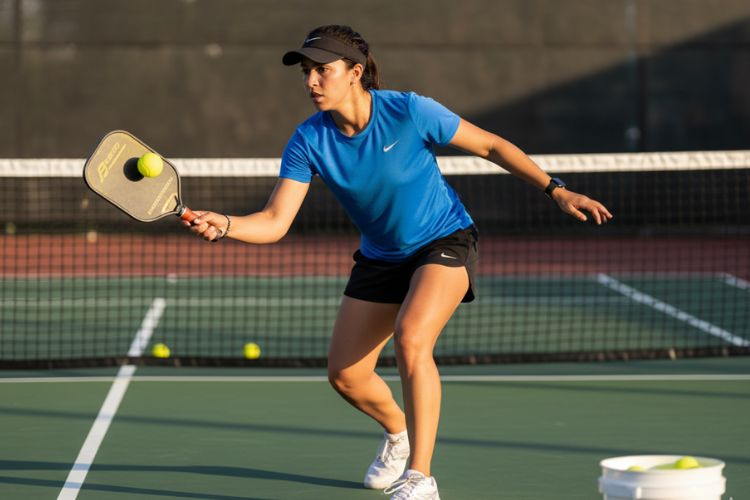
Practicing with one hand can improve your paddle control and coordination. It may feel awkward in the beginning, but it forces you to focus more on your technique.
Over time, this drill helps you gain better control and makes your regular shots feel much easier.
Consistency Challenge
End your session with a simple challenge. Count how many shots you can keep going without making a mistake. Try to beat your previous score each time.
This keeps your practice engaging and gives you something to work toward. It also helps you stay focused and build endurance over time.
Simple Tips to Improve Faster
If you really want to see progress, it’s not just about doing drills. It’s about how you approach them. When you practice pickleball at home, try to stay focused on quality instead of speed. Rushing through drills won’t help you improve.
Take your time, slow things down, and pay attention to your form. It’s better to do fewer shots correctly than to rush through many without control. Short, consistent sessions work much better than long, irregular ones.
If you’re trying to figure out how to practice pickleball alone, remember that consistency is your biggest advantage. Even 15 to 20 minutes a day can add up quickly and make a noticeable difference in your game.
Common Mistakes to Avoid
Many players start strong but lose momentum because they fall into a few common mistakes. One of the biggest ones is practicing without a clear goal. If you just hit the ball around without focus, it becomes harder to improve.
Another mistake is ignoring footwork. Even in small spaces, movement matters. Good footwork helps you stay balanced and ready for the next shot. It’s also important not to rush. Take your time and stay patient during your pickleball practice.
If you’re learning how to practice pickleball alone, try to stay aware of your habits. Repeating the same mistakes over and over can slow down your progress, so it’s important to stay mindful and adjust as you go.
When to Practice on Court Instead
While it’s great to practice pickleball at home, there comes a point where you need to take your skills to the court. Home practice helps you build a strong foundation, but real games teach you timing, positioning, and decision-making.
If you feel more confident with your shots and control, it’s a good time to step onto the court and test your skills. Playing with others helps you apply what you’ve learned and pushes you to improve even more.
Sometimes, working with a pickleball instructor can also help you move forward faster. They can point out small mistakes and guide you in the right direction so you don’t feel stuck.
Conclusion
Learning how to practice pickleball at home can completely change the way you improve. You don’t need perfect conditions or a full court to get better. With a little consistency and the right drills, you can build strong fundamentals right from your home.
The key is to keep showing up, stay patient, and focus on small improvements every day. Over time, everything starts to come together, and you’ll notice your confidence growing with each session.
So don’t wait around for the perfect moment. Pick up your paddle, start small, and build your game step by step.