If you’ve recently started playing pickleball, you’ve probably experienced that slightly awkward moment when it’s your turn to serve, and someone asks, “What’s the score?” You pause, try to remember the numbers, and suddenly everything feels confusing. This is where many beginners hesitate, not because the game is difficult, but because scoring in pickleball feels unfamiliar at first. The three-number system, the rotation of servers, and the idea that only one team can score can make things seem more complicated than they actually are.
The truth is, once you take a step back and understand the basics, everything starts to fall into place. You don’t need to memorize everything at once or worry about getting it perfect right away. In this guide, we’ll go through the process slowly and clearly so you can build confidence, understand how the system works, and feel comfortable calling the score during a real game.
What Is Scoring in Pickleball?

At its core, scoring in pickleball is simply a way to keep track of points during a game, but it works a little differently compared to other sports. The most important rule, and the one that beginners should focus on first, is that only the serving team can score a point. This single idea removes a lot of confusion and helps you understand what’s happening during rallies.
Many new players try to figure out everything at once and end up mixing things up, especially when they see points not being awarded after winning a rally. Instead of overthinking it, try to break it down. If your team is serving and you win the rally, you get a point. If you are not serving, your goal is simply to win the serve back. Once you get used to this rhythm, the rest of the scoring system starts to make more sense naturally.
The Pickleball Scoring System Explained
Before you dive into the details, it helps to understand how the scoring system is structured in a real game. At first, it may seem confusing, especially in doubles, but once you break it into smaller parts, it becomes much easier to follow. Let’s start by understanding the three-number system and how players call the score correctly.
The Three Numbers in Doubles
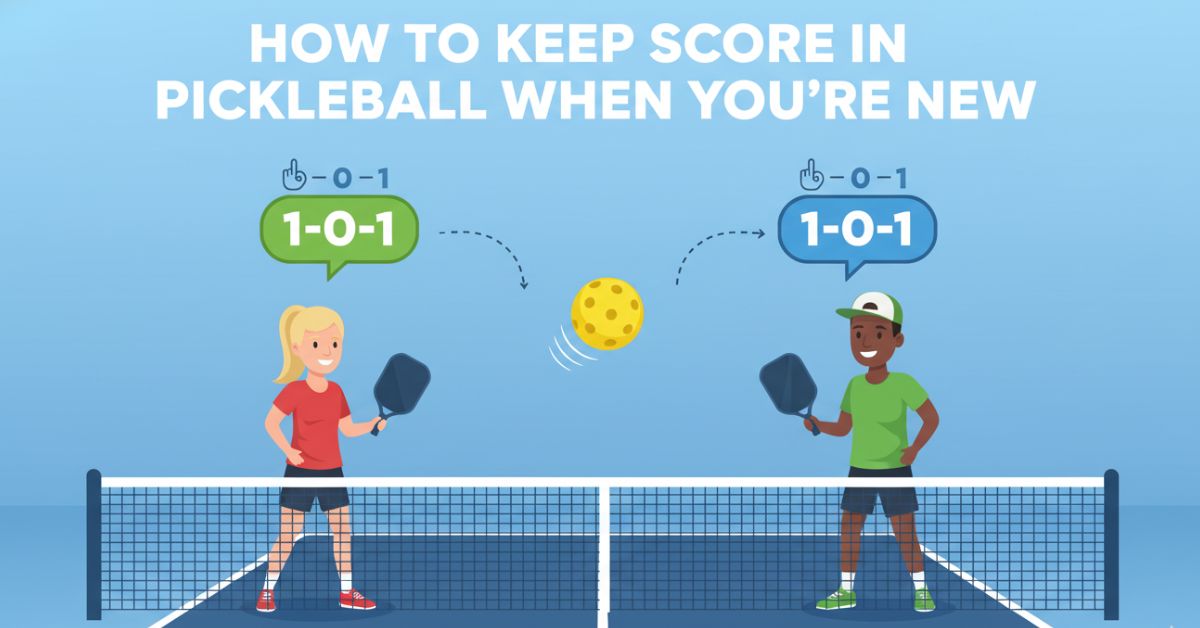
One of the biggest reasons beginners feel confused is the three-number scoring format used in doubles. When you hear something like “6-4-2,” it may sound complicated at first, but each number has a simple meaning. The first number represents the serving team’s score, the second number represents the receiving team’s score, and the third number indicates whether it is the first or second server on that team.
Instead of trying to memorize this instantly, it helps to say the score slowly and understand what each part represents. Over time, your brain starts to recognize the pattern, and it becomes automatic. This is an important part of pickleball scorekeeping, and once you get comfortable with it, you will notice that the game flows much more smoothly without interruptions or confusion.
How to Call the Score Correctly
Calling the score is not just a formality. It plays a key role in keeping the game organized and fair for everyone on the court. Before every serve, the server must clearly announce the score so that all players know the current situation. For example, calling “6-4-2” tells everyone exactly where the game stands and who is serving.
Beginners often forget to call the score or rush through it, which can lead to confusion during the game. It is better to slow down, take a moment, and say it clearly before serving. Learning how to keep score in pickleball properly also builds confidence, because you are not second-guessing yourself or relying on others to track the score for you.
How Scoring in Pickleball Works (Step-by-Step)

Once you understand the basic rules, the next step is to see how scoring in pickleball actually works during a game. It follows a simple flow, and each rally leads to a clear outcome. Let’s break it down into key moments so you can easily follow what happens when you score, lose a rally, or reach the end of a game.
When You Score Points
Understanding when you score is essential if you want to feel confident during a match. You only earn points when your team is serving and wins the rally. This rule may feel unusual at first, especially if you come from sports where points can be scored at any time, but it becomes easier once you see it in action.
If your team receives and wins the rally, you do not get a point. Instead, you gain the opportunity to serve. This creates a natural flow in the game where teams compete not just for points, but also for the chance to serve and take control of the rally. This is also where strategies like pickleball stacking come into play, helping teams position themselves more effectively while maintaining the correct serving order. Once you get used to this idea, you will stop feeling confused and start anticipating what happens next.
When You Lose a Rally
When the serving team loses a rally, the serve does not immediately go to the other team. Instead, it moves to the next server on the same team. In doubles, each player gets a chance to serve before the serve is handed over. Once both players lose their serve, a side out occurs, and the other team gets the opportunity to serve.
At first, this rotation can feel like a lot to keep track of, but with a little practice, you will start to follow it naturally. This is where keeping score in pickleball becomes easier with experience, because you begin to recognize patterns instead of thinking about each step individually.
Winning the Game
Most pickleball games are played to 11 points, but there is one important condition that players must remember. A team must win by at least two points. This means that if the score reaches 10-10, the game continues until one team leads by two points.
This rule ensures that games remain competitive and prevents matches from ending too abruptly. It is commonly referred to as the pickleball winning score rule, and it adds an extra layer of excitement as the game approaches the final points.
Doubles Scoring in Pickleball

Doubles is where most people start playing pickleball, and honestly, this is also where scoring in pickleball can feel a bit confusing in the beginning. There are a few extra things happening compared to singles, like two players serving and the score having three numbers. But once you play a few games and see how it works in real time, it starts to click. As you continue improving and moving through different pickleball levels, this system starts to feel more natural and easier to manage. Let’s go through it step by step so you can feel more comfortable and not second-guess yourself during a match.
First Serve Rule
At the beginning of a doubles game, the score starts at 0-0-2. This may seem unusual, especially for beginners who expect the game to begin with the first server. However, this rule is designed to keep the game balanced by limiting the serving advantage at the start.
Although it might feel confusing the first few times, most players quickly get used to it after playing a couple of matches. Once it becomes familiar, you won’t even think about it anymore, and it will feel like a natural part of the game.
Server Rotation
In doubles, each team gets two chances to serve before losing possession. The first player serves until they lose a rally, after which the serve moves to their partner. When the second player also loses, the serve goes to the opposing team.
This rotation is a key part of how to count score in pickleball, and it becomes easier to understand when you see it in action. Instead of trying to memorize the rules, focus on following the flow of the game, and the rotation will start to make sense on its own.
Example to Make It Clear
Imagine the game starts at 0-0-2. The serving team wins the first rally, so the score becomes 1-0-2. They continue playing and eventually lose the rally, which passes the serve to the partner. If the partner also loses, it becomes a side out, and the other team gets the serve.
Walking through examples like this helps you visualize what is happening, making it much easier to understand the process rather than just reading rules.
Singles Scoring in Pickleball
If doubles scoring feels a bit confusing right now, don’t worry. Singles is much easier to understand and a great way to get comfortable with the basics. With fewer rules to think about, you can focus on learning how the score works without feeling overwhelmed.
Only Two Numbers
Singles scoring is much simpler compared to doubles because it only uses two numbers. There is no third number to indicate the server, which removes one layer of complexity. For beginners, this can be a great way to start learning the basics before moving on to doubles.
Even and Odd Rule
In singles, the serving position depends on your score. If your score is even, you serve from the right side. If it is odd, you serve from the left side. This rule helps players stay in the correct position and keeps the game organized.
Common Beginner Mistakes in Scoring
It is completely normal to make mistakes when you are learning something new. Many beginners forget the server number, mix up scores, or hesitate when calling them out. These small errors are part of the learning process and should not discourage you.
Instead of worrying about making mistakes, focus on improving with each game. Over time, your confidence will grow, and you will find yourself making fewer errors and understanding the flow of the game much better.
Quick Tips to Remember Pickleball Scoring Easily
If you want to make things easier for yourself, try to keep a few simple tips in mind. Always remember that only the serving team scores, and make it a habit to say the score clearly before serving. Playing regularly also helps you build confidence and understand the rhythm of the game.
Joining pickleball clinics for beginners can also help you learn faster, as you get guidance and real-time feedback. With consistent practice, you will start to feel more comfortable, and the scoring system will begin to make sense without overthinking it.
Why Learning Scoring in Pickleball Matters
Understanding the scoring system does more than just help you keep track of points. It builds confidence, improves communication on the court, and allows you to focus more on your performance instead of worrying about mistakes.
When you are comfortable with scoring, the game feels smoother and more enjoyable. You are able to stay present, react better, and fully engage in the experience without hesitation.
Learn Pickleball Faster With Expert Guidance
If you want to improve quickly and avoid confusion, learning from experienced coaches can make a big difference. ATX Pickleball Academy offers structured guidance that helps beginners understand not just the rules but also the strategy behind the game.
With the right support, you can build a strong foundation, improve your skills, and gain confidence much faster than trying to figure everything out on your own.
Conclusion
At first, scoring in pickleball may seem confusing, especially with the three-number system and server rotations. However, once you break it down and practice regularly, it becomes much easier to understand and apply.
The key is to stay patient, take things step by step, and keep playing. With time, you will stop thinking about the score and start enjoying the game naturally.