If you’re new to pickleball or even playing casually for a while, you’ve probably heard players mention “stacking” and wondered what they’re talking about. Is it a rule? Is it a trick? Or is it something only advanced players use? The truth is, stacking can sound confusing at first, but once you understand it, it becomes one of those strategies that simply makes sense.
This guide breaks everything down in a clear, easy way. We’ll cover what stacking means, why players use it, how it works, and when it actually helps. By the end, you’ll know whether stacking is something you should try or just keep in mind for later.
What Does Stacking Mean in Pickleball?
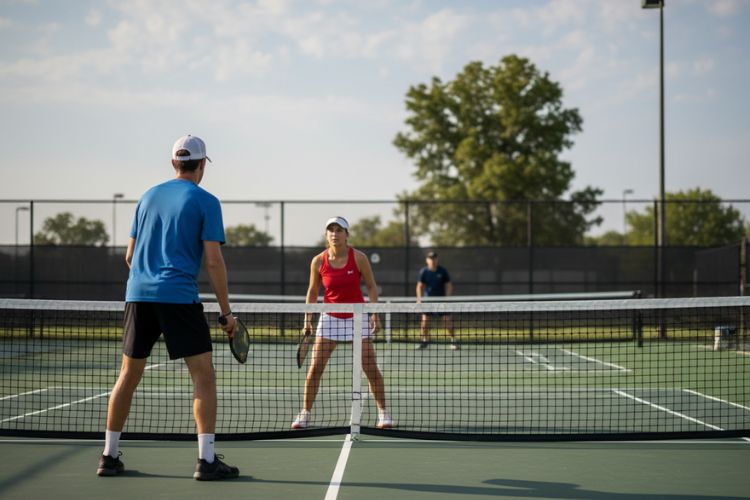
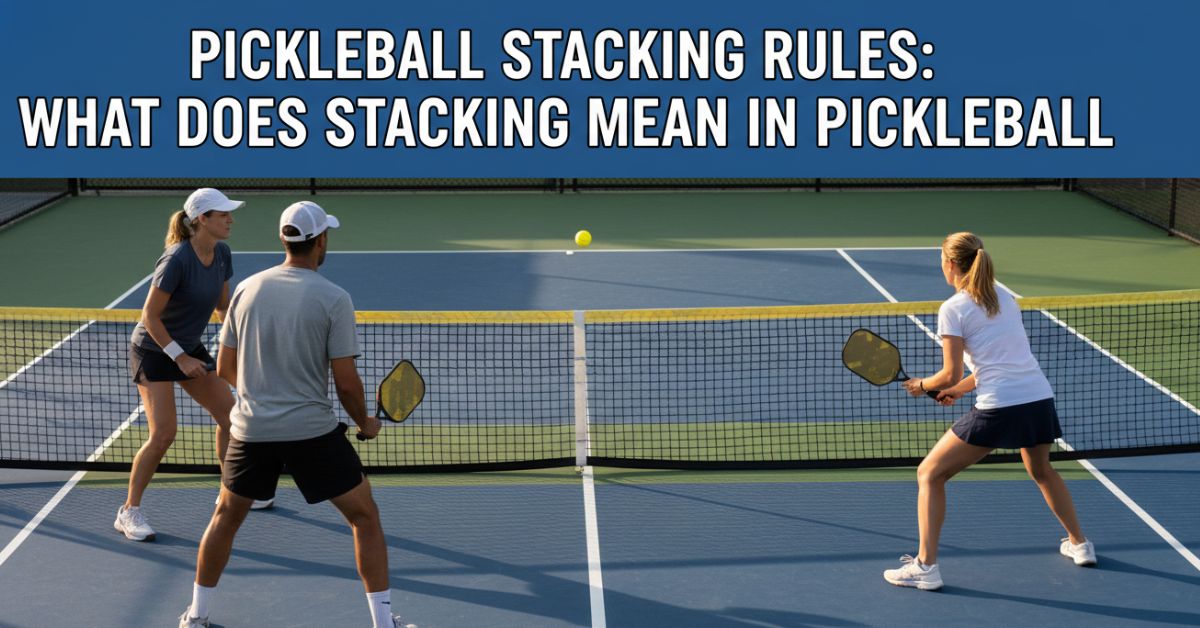
Stacking in pickleball is not a special rule or a complicated move. It’s simply a way for doubles partners to position themselves on the court so each player stays on their preferred side. Most of the time, this is done to keep a strong forehand in the middle or to protect a weaker backhand.
In a normal game, players switch sides based on the score. With stacking pickleball positioning, players still follow the serving rules, but they move after the serve to end up where they want to play. That’s all stacking really is. No shortcuts, no bending rules.
You’ll mostly see stacking used in doubles games, especially when one partner clearly plays better on a specific side of the court.
Why Do Players Use Stacking in Pickleball?
So why go through the extra effort? Because positioning matters more than many people realize. When players use stacking in pickleball, they’re trying to play to their strengths instead of letting rotation decide everything.
Some players have a strong forehand that works best from the left side. Others feel more comfortable controlling the right side of the court. Stacking helps keep those players where they perform best. It can also reduce errors, improve communication, and make rallies feel more controlled.
That said, stacking is not a magic solution. If both partners are similar in skill, stacking may not make much difference. Sometimes, simple, clean play works just as well.
Basic Pickleball Stacking Rules You Must Know
Before trying anything new, it’s important to understand the rules behind it. The good news is that stacking is completely legal. According to official guidelines, players are allowed to stand anywhere on the court as long as they follow the correct serving positions.
The key part of pickleball stacking rules is this: the server and receiver must start in the correct position based on the score. After the serve, players can move freely. This is where stacking comes into play.
Most mistakes happen when players forget who should be serving from which side. Stacking doesn’t change the serving order. It only changes where players stand after the ball is in play.
How Stacking Works in Pickleball Doubles
Let’s talk about how this works during an actual game. In doubles, stacking pickleball positioning depends on whether your team is serving or receiving.
When your team is serving, the correct server stands in the proper service box. Their partner may stand slightly behind or off to the side. Once the serve is hit, both players quickly move into their preferred positions.
When your team is receiving, the receiver still has to stand in the correct service box. That part doesn’t change. The partner, though, has more freedom and can stand wherever feels comfortable. Once the serve comes in and the return is made, both players simply slide into their preferred spots. If you’re thinking about how to stack in pickleball, it really comes down to calm timing and clear understanding with your partner. Follow the rules first, then move naturally without rushing or creating confusion.
Traditional Stacking vs Full Stacking
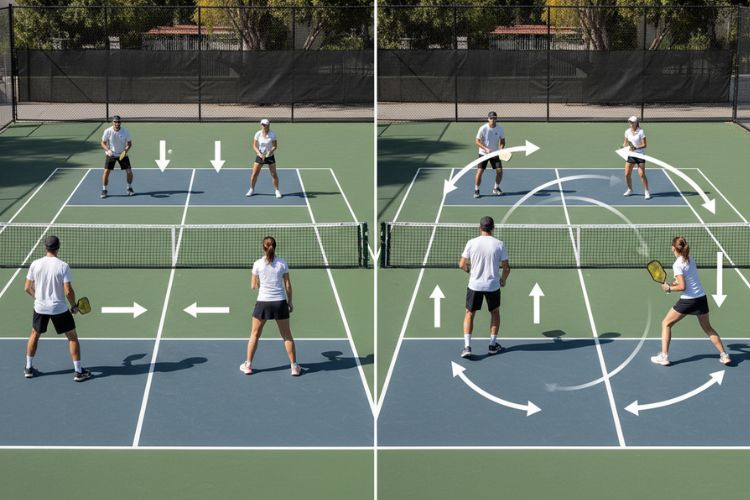
There are two main ways players approach stacking, and knowing the difference helps you decide what feels right for your game.
Traditional stacking is more casual. Players only stack in certain situations, such as when one partner serves or when the score lines up in a favorable way. This is common among recreational players who want flexibility.
Full stacking is more structured. Players use stacking on every single point, no matter the score. This approach takes practice and strong communication. It’s often seen in competitive matches where positioning is critical.
If you’re still learning, traditional stacking is usually easier to manage.
Stacking in Singles vs Doubles Pickleball
One common question is whether stacking works in singles. The short answer is not really. Singles pickleball already forces players to cover the entire court, so stacking doesn’t provide much benefit.
That’s why stacking in pickleball is almost always discussed in the context of doubles. With two players sharing the court, positioning becomes far more important, and stacking can actually make a difference. If you mostly play singles, this strategy isn’t something you need to worry about yet.
Common Mistakes Players Make When Stacking
Even though stacking pickleball sounds simple, small mistakes can cause confusion or lost points. One of the most common errors is forgetting the correct serving position. Players get so focused on stacking that they line up incorrectly before the serve.
Another mistake is switching too early. Movement should happen after the serve, not before. Poor communication is another issue. If partners aren’t clear about who moves where, it leads to hesitation and missed shots.
Finally, some players overuse stacking. Not every situation requires it, and forcing it can sometimes disrupt rhythm instead of helping.
When Should You Use Stacking in Pickleball?
So when does stacking actually make sense? It’s most helpful when one player clearly plays better from a specific side. Mixed doubles is a common example, where players want to keep stronger shots in the middle.
Stacking also helps when partners have uneven skill levels. Keeping the stronger player involved more often can stabilize the game. However, beginners should focus first on learning the basics before worrying about advanced positioning.
If you’re just starting out with pickleball for beginners, it’s okay to wait before adding stacking to your game.
A Simple Example of Pickleball Stacking

Imagine two partners, Alex and Sam. Alex has a strong forehand on the left side, while Sam prefers the right. Without stacking, they would switch sides constantly.
With the stacking pickleball strategy, Alex always moves back to the left after the serve, and Sam shifts to the right. They still follow serving rules, but once the rally begins, both players end up where they play best. That’s stacking in its simplest form. No tricks, just smart positioning.
Is Stacking Allowed in Tournament Play?
Yes, stacking is allowed in tournament play as long as serving rules are followed correctly. In competitive matches, referees pay close attention to starting positions, especially during serves.
This is why experienced players practice stacking regularly. At higher levels, even small mistakes can cost points. Understanding pickleball positioning helps avoid unnecessary faults and keeps the game flowing smoothly.
If you plan to move into competitive play or improve your pickleball rating, learning stacking becomes more valuable.
Should You Try Stacking in Pickleball?
Stacking in pickleball is one of those strategies that looks confusing from the outside but feels natural once you try it. It’s not required to enjoy the game, and it’s not something you need to rush into. Think of it as a tool you can use when it fits your playing style.
If you’re still learning, focus on consistency, communication, and court awareness first. As your confidence grows, stacking can become a helpful way to play smarter, not harder. And if it doesn’t suit your game, that’s okay too. Pickleball is about enjoying the process as much as improving your skills.
If you want hands-on guidance beyond reading strategies, ATX Pickle Academy offers structured coaching for players at every level. From beginners learning basics to advanced players refining court positioning, their lessons focus on fundamentals, smart strategy, and confidence-building play that helps players grow steadily and enjoy the game more.
FAQs
Is stacking legal in pickleball?
Yes, stacking is fully legal as long as players serve and receive from the correct positions.
Do both players have to stack?
Yes, stacking only works when both partners understand the plan and move accordingly.
Can beginners use stacking?
They can, but it’s usually better to learn basic positioning first before adding complexity.
Does stacking affect serving order?
No, the serving order stays the same. Only positioning changes.
Will stacking improve my game instantly?
It can help, but it won’t replace practice, communication, and solid fundamentals.