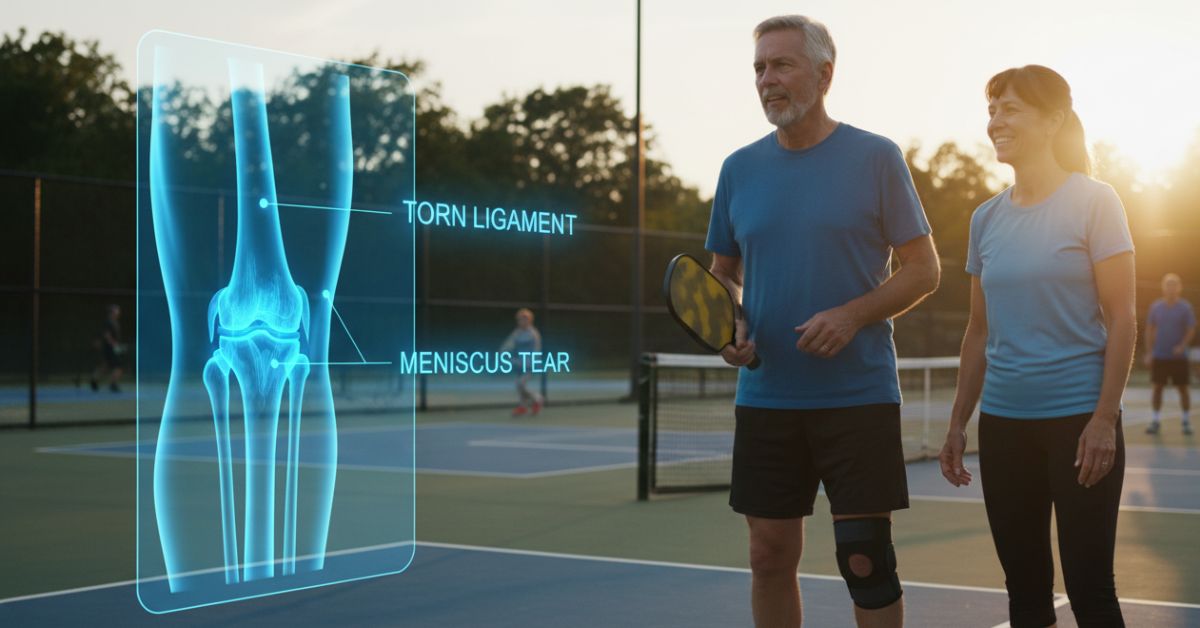
Do your knees hurt after pickleball games more than they used to? You are not alone. Pickleball is growing fast, and while it is fun and social, many players are now dealing with knee problems. Pickleball is often called a low-impact sport, but that does not mean it is easy on the joints. Movements like sudden stops, quick turns, and lunges can stress the knees over time.
In this guide, we will talk about the most common pickleball knee injuries, what causes them, how to recover, and whether you can safely return to the court. If you love the game, it helps to know what your knees are going through and how to protect them.
Why Knee Injuries Are Common in Pickleball?
Pickleball involves short sprints, side steps, and fast changes in direction. These movements can wear down your knees, especially if you play on hard courts or skip warm-ups. Many players also underestimate how physical the game can be. Even though it feels gentle, the stop-and-go motion adds pressure to your joints.
Age can also play a part. Older players often have weaker muscles and less flexibility, which puts extra strain on the knees. Hard surfaces and worn-out shoes make it worse. If you do not stretch or give your body enough rest, you may notice early signs of knee pain from pickleball after only a few matches. Over time, that discomfort can turn into injury.
One reason pickleball injuries are common is that players join the sport later in life without building up proper strength or conditioning. The body is not always ready for quick movements, and the knees take most of the impact.
Common Types of Pickleball Knee Injuries
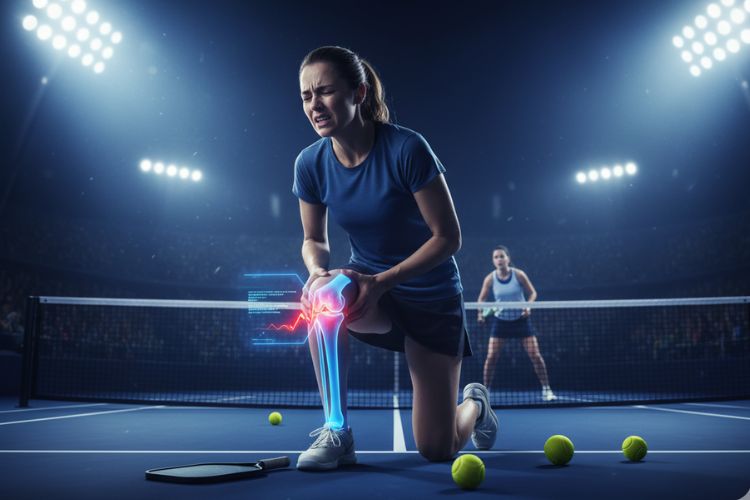
Knee problems in pickleball can range from mild soreness to serious ligament tears. Here are some of the most common ones and what causes them.
1. Patellar Tendonitis (Jumper’s Knee)
This happens when the tendon that connects your kneecap to your shinbone becomes irritated. It often starts with a dull ache under the knee and stiffness after games. Players who do a lot of lunging or bending are more likely to feel this kind of pain. Stretching and strengthening can help, but rest is just as important.
2. Meniscus Tears
A meniscus tear occurs when the knee twists too much while your foot stays in place. You might feel a pop followed by swelling or trouble bending your leg. It is a common issue during quick turns and pivots. Sometimes small tears heal on their own, but bigger ones may need therapy or even surgery.
3. ACL Injuries
An ACL injury is one of the more serious pickleball knee injuries. It can happen when you land awkwardly after a jump or suddenly change direction. You might hear a pop or feel the knee give out. Recovery takes time and often includes physical therapy. In severe cases, surgery may be needed before returning to the court.
4. MCL Sprain
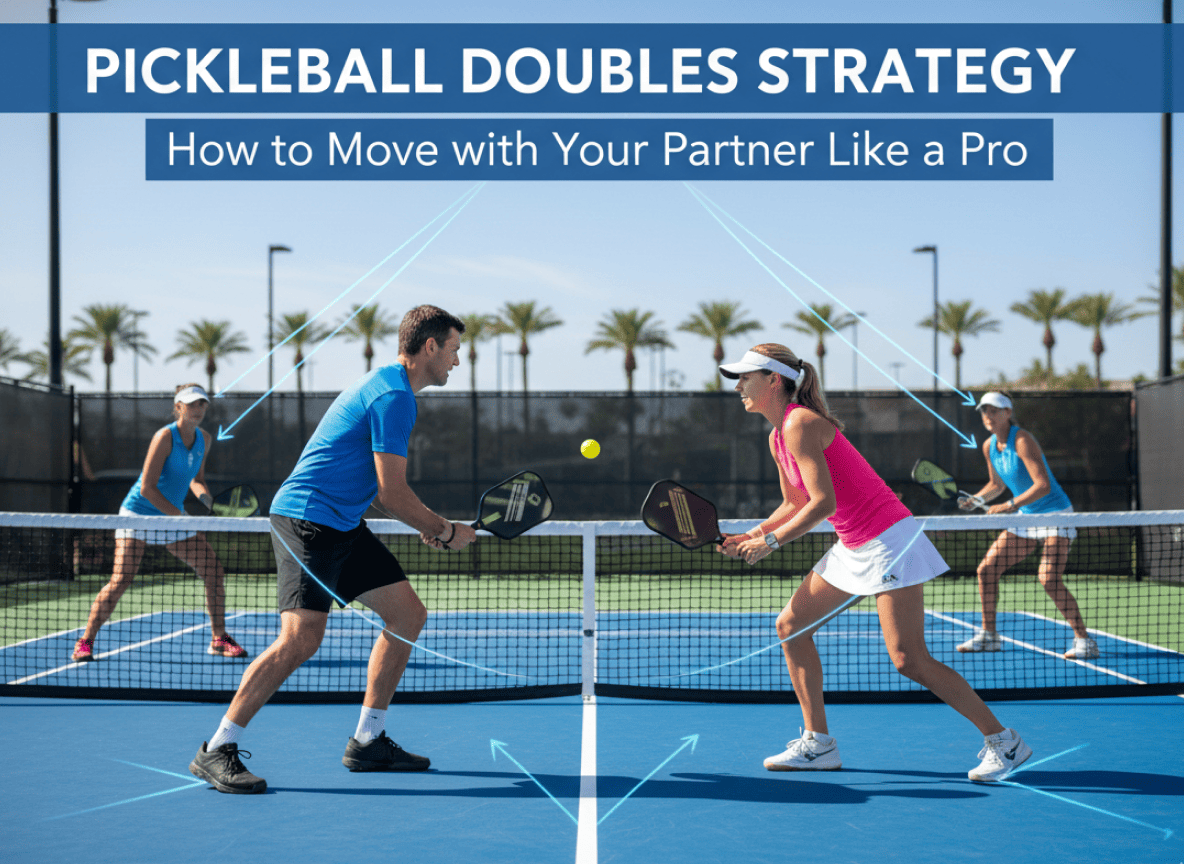
An MCL sprain happens when the knee is pushed inward during side-to-side movement. It causes pain on the inside of the knee and may lead to stiffness. Doubles players are more likely to experience this because of the quick lateral motion. Ice, rest, and gradual stretching usually help with healing.
5. Osteoarthritis and Overuse Pain
Many players over forty start to notice constant stiffness or dull aching in the knees. This can be a sign of early arthritis from years of wear and tear. Playing too often without enough recovery time only adds to the discomfort. Even though you may not be injured, it can still feel like your knees hurt after pickleball every time you play.
When to Rest and When to See a Doctor?
Sometimes you can play through light soreness, but pain that lasts for several days is a red flag. If your knee swells, clicks, or feels unstable, take a break. It is better to rest for a week than risk a bigger injury that takes months to heal.
If you cannot walk normally, bend your knee, or put weight on it, it is time to see a doctor. Getting an early diagnosis can prevent long-term problems. A specialist might recommend imaging, therapy, or exercises to restore strength and movement.
Can You Still Play Pickleball After a Knee Injury?
Many players ask, Is pickleball bad for knees after an injury? The answer depends on the type of injury and how well you recover. Mild strains and soreness can improve with rest, ice, and light stretching. More serious injuries like ACL or meniscus tears need more time and guided therapy before returning to the game.
When deciding if you can play again, check your range of motion. Your knee should move freely with no swelling or sharp pain. Make sure you can squat and change direction without discomfort. Playing too soon can make knee pain from pickleball worse. Listen to your body and take it slow.
A physical therapist can help you build strength safely. Ask them for specific knee exercises for pickleball that improve balance and support the joint. Once your knee feels stable, you can start light practice again.
How to Prevent Pickleball Knee Injuries?
Warm-up and stretching matter more than most players realize. Spend at least five minutes doing light cardio and simple stretches before each match. This helps your muscles and joints loosen up.
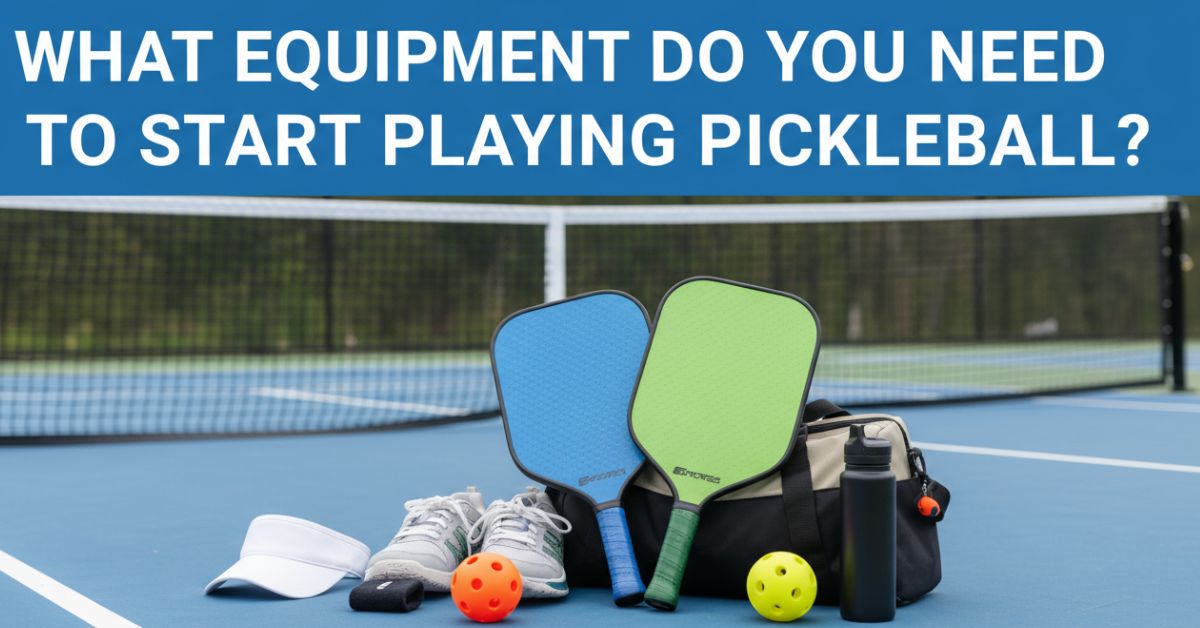
Wear proper court shoes that support side movement. Running shoes are not made for quick stops and can strain your knees. Strength training is another key step. Strong leg and core muscles help your body absorb impact better. Add simple moves like squats and lunges to your weekly pickleball workout to build protection.
Modify your play if you are recovering. Try doubles instead of singles or shorten your games. Take breaks and ice your knees afterward. Even small changes can prevent future pain.
And remember, if your knees hurt after pickleball more than usual, it is a sign you need rest. Pushing through pain often leads to bigger problems later.
Knee Support and Gear That Can Help
Braces, compression sleeves, and good insoles can make a big difference. They add stability and reduce pressure on the joint. A soft knee brace can help players who still feel weak after recovery. Compression sleeves help with swelling and warmth, which improves blood flow.
But gear alone is not enough. It supports recovery but does not fix the real cause. Focus on movement and muscle balance. Try doing gentle knee exercises for pickleball players who are recovering to regain control and confidence on the court.
When Is It Time to Take a Break or Quit?
Sometimes the hardest part of recovery is knowing when to stop. If your knee pain keeps getting worse or you cannot move comfortably, it might be time to rest completely. Keep in mind that stopping for a while does not mean you have to give up the sport.
If you cannot play, stay active with low-impact exercises like swimming, cycling, or walking. These help you stay in shape without straining your knees. Mental recovery is just as important. Injuries can be frustrating, but staying positive helps you heal faster.
If you are dealing with other injuries from playing pickleball, consider adjusting how you train and rest. Give your body time to rebuild before returning to full play.
Final Thoughts
Pickleball knee injuries are common, but they do not have to end your time on the court. Most players can recover fully with the right care, rest, and smart conditioning. Pay attention to early signs of pain and treat them before they get worse.
If you ever wonder is pickleball hard on knees, the truth is it can be if you ignore your body. But with strength work, good shoes, and proper warm-ups, you can keep your joints healthy. The more consistent you are with knee exercises for pickleball, the less likely you are to face another setback.
So if your knees hurt after pickleball, take it as a reminder to care for them better, not as a reason to quit. Play smarter, give your body time to recover, and enjoy the game for years to come.
If you need help improving your form or learning safe movement techniques, you can get help from ATX Pickle Academy. They guide players on how to move efficiently and play without putting extra stress on the knees.
FAQs
Is pickleball bad for knees?
It can be if you play too often without rest or use poor form. With good shoes, stretching, and strong leg muscles, it is generally safe.
Why do my knees hurt after pickleball?
Your knees may hurt from overuse, tight muscles, or playing on hard courts. Rest and gentle stretching usually help.
Can I play pickleball with knee pain?
Light play is fine if the pain is mild. But stop if it gets worse or lasts more than a few days.
What are the best knee exercises for pickleball players?
Squats, lunges, and leg raises help strengthen the muscles that protect your knees.
How long should I rest after a knee injury from pickleball?
Minor strains may need a few days, while serious injuries like ACL or meniscus tears can take months. Always follow your doctor’s advice.